London
London has a lot of famous landmarks. And some of them have some
not-so-famous history.
Not a lot of people know this...
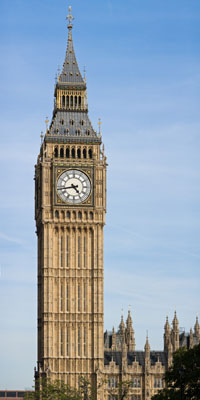
Big Ben
|
“
On New Years Eve 1962, heavy snow and ice on the hands tripped the
failsafe mechanism that detaches the pendulum from the clockwork - so it
chimed in the new year 10 minutes late.
”
|
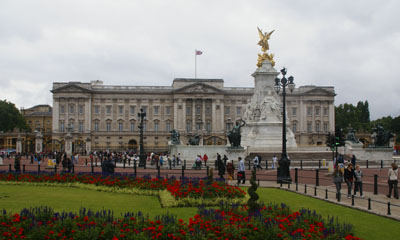
Buckingham Palace
“
The palace contains 77,000 square metres (828,000 square feet) of
floorspace, making it about one third the size of the Empire State
Building. It has its own post office, and its own postcode - SW1A 1AA.
”
|
|
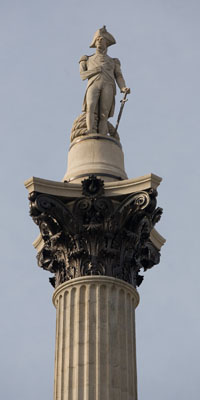
Nelsons Column
|
“
The height of the column was always given as 56 metres (184 feet), but
before it was refurbished in 2006, laser surveys were taken during which
it was found that it was actually only 50 m (164 feet) from the bottom
of the first step on the pedestal to the tip of the admirals hat.
”
|
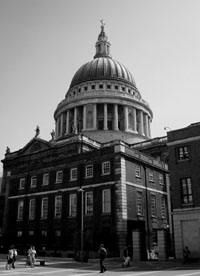
St Pauls Cathedral
“
Christopher Wrens cathedral is actually the fifth to stand on the spot.
The first burned down in 675. The second was sacked by the Vikings in
961. The third, in which Ethelred the Unready was buried, burnt down
(with the whole city) in 1087. The fourth took 200 years to build, and
nearly burned down again while still under construction in 1136. It was
ultimately destroyed in the Great Fire of London in 1666.
”
|
|
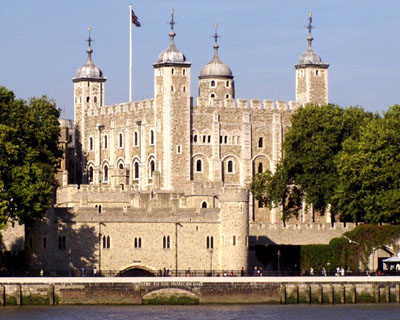
The Tower of London
|
“
In the 17th century, when the Royal Observatory was sited in the north
eastern turret of the White Tower, Royal Astonomer John Flamsteed
complained to King Charles II that the ravens were in his way. At
first, Charles ordered their removal, but then he was told of the legend
that if the ravens ever leave the Tower of London, the White Tower would
fall and "a terrible disaster" would befall England. With the
then-recent civil war no doubt uppermost in his mind, he decided not to
take the chance, and had them put back, decreeing that at least six
ravens should be kept at the Tower at all times.
”
|
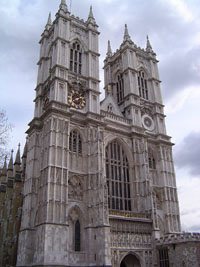
Westminster Abbey
“
In 1540, King Henry VIII granted a charter giving the Abbey cathedral
status until 1550, thereby sparing it from the Dissolution of the
Monasteries. The expression "robbing Peter to pay Paul" is believed to
arise from this period when money meant for the Abbey, which was
dedicated to St Peter, was diverted to the treasury of St Pauls
Cathedral.
”
|
|
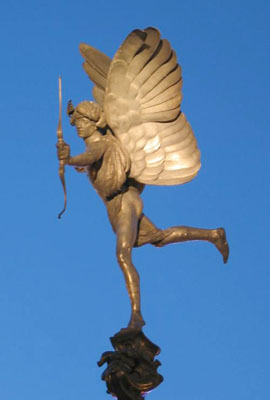
Piccadilly Circus
|
“
The statue is generally believed to depict Eros, but is in fact an image
of his twin brother, Anteros. It was originally sited in the centre of
the Circus, but was moved to the south-western side after World War II.
It was the first statue in the world to be cast in aluminium.
”
|